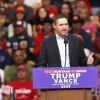
Zinke Notches Key Victories as Farm Bill Clears House

Congressman Ryan Zinke announced the House passage of the Farm, Food, and National Security Act of 2026, commonly known as the Farm Bill, a comprehensive piece of legislation designed to strengthen American agriculture, support rural communities, and improve forest and land management. The bill includes six provisions sponsored or co-sponsored by Zinke.
“The Farm Bill gives farmers and ranchers the certainty they need to keep doing what they do best and keeps the communities around them strong and stable,” said Zinke. “It preserves food assistance for those who truly need it while cutting waste and fraud and making sure families have access to nutritious food. It supports rural economies, strengthens basic infrastructure so it actually works for the people who live there, and helps folks get access to the health services they rely on without having to leave their towns. It also pushes smarter forest management to reduce wildfire risk and keep our lands healthier for the long haul. At the end of the day, this bill is about keeping American agriculture and small towns strong and built to last.”
The Farm Bill, typically reauthorized every five years, has been operating under an extension since 2023. The legislation reauthorizes and modernizes key USDA programs through 2031, providing long-term stability for producers. It is supported by more than 500 agricultural and stakeholder organizations and maintains budget neutrality.
Key provisions of the bill expand access to credit and risk management tools for farmers and ranchers, improve SNAP with stronger accountability and a focus on healthier outcomes, bolster support for specialty crop producers, streamline conservation programs, enhance export promotion efforts, modernize rural development and energy programs, protect interstate livestock commerce, and maintain access to critical crop protection tools.
Among Zinke’s notable victories in the bill is a permanent legislative fix to the Cottonwood Decision, one of the most consequential forest management rulings in Montana’s recent history. The 2015 ruling by a federal judge forced the Forest Service to reopen Endangered Species Act consultations on already approved forest plans, giving activist groups a pathway to repeatedly relitigate projects in court. Since then, Montana has become one of the most litigated states in the country for timber harvesting, with projects delayed or halted, mills closed, and rural counties left in limbo. The fix limits when the U.S. Forest Service must reinitiate consultation with the U.S. Fish and Wildlife Service to cases involving substantial new developments or changes to forest management plans, reducing delays and improving wildfire response and habitat management across Montana and the West. Zinke had previously introduced similar legislation in 2016 and 2023.
Zinke also secured inclusion of the Habitat Connectivity on Working Lands Act, which directs USDA to provide more resources and incentives for farmers and ranchers to improve habitat connectivity and wildlife movement on working lands. The provision prioritizes wildlife corridors within critical conservation areas and encourages practices like virtual fencing to better manage livestock.
Additional provisions co-sponsored by Zinke include the Rural Hospital Technical Assistance Program Act to help rural hospitals remain operational, the Collaborative Forest Landscape Restoration Program Reauthorization Act, and two measures strengthening the Forest Service’s ability to suppress wildfires and promote active forest management to reduce hazardous fuels.
The bill now heads to the Senate for a vote.
Related Stories:
-
 Montana State doctoral student receives inaugural fellowship for human health researchers
-
 Report: Taxpayers lose $500B annually to fraud as states resist oversight
-
 Sheehy Calls for Jack Smith Accountability After Arctic Frost Probe
-
 Democrat holds narrow lead in Minnesota U.S. Senate race
-
 UM Graduate Student Discovers, Designs Drugs to Improve Human Health
-
 Flint Unveils Tax Plan, Targets Forstag’s Lobbying Record