CENTCOM Launches First Multinational Attack Drone Task Force
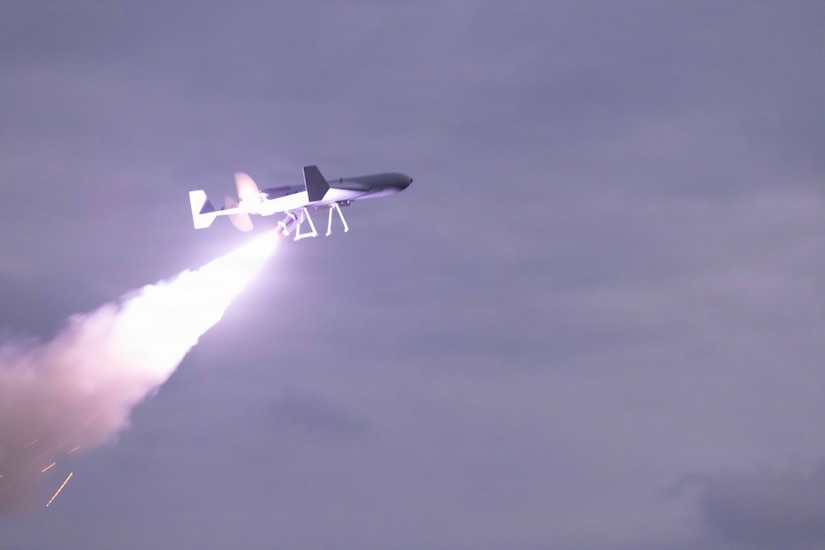
WASHINGTON — U.S. Central Command is establishing its first multinational attack-drone task force, expanding the military’s use of relatively low-cost unmanned weapons as the Pentagon works more closely with regional partners to counter threats across the Middle East.
The new unit, Task Force Falcon Strike, will combine American and allied one-way attack drones operating in the air, on the surface of the sea and underwater, CENTCOM announced.
U.S. Special Operations Command Central personnel will lead the task force, which is expected to include military representatives from the U.S. and participating regional partners.
The initiative marks a significant expansion of the Pentagon’s push to deploy unmanned attack systems across multiple domains rather than relying exclusively on traditional aircraft, ships and missiles.
“Integrating and deploying our new capabilities together will help us rapidly realize the new possibilities that are on the horizon,” Adm. Brad Cooper, commander of U.S. Central Command, said.
CENTCOM has begun consultations and is extending formal invitations to regional partners. The command didn’t initially identify which countries are expected to participate.
The task force builds on Task Force Scorpion Strike, which CENTCOM established nine months ago as the U.S. military’s first dedicated one-way attack-drone squadron in the Middle East.
Scorpion Strike has since moved from experimentation into combat operations.
The unit recorded the first launch of an aerial one-way attack drone from a U.S. Navy warship in December. CENTCOM said its unmanned aerial systems were subsequently employed during Operation Epic Fury, while unmanned attack vessels were used in strikes against Iranian port facilities in July.
“Task Force Falcon Strike will expand on Scorpion Strike’s success given the tremendous innovation happening among our regional allies and partners,” Cooper said.
One-way attack drones are designed to fly into a target rather than return after completing a mission. Their comparatively low cost and ability to be deployed in large numbers have made the systems an increasingly important part of modern warfare.
The Middle East has become a major proving ground for the technology, with drones used for surveillance, attacks on military installations, strikes against shipping and attacks on infrastructure.
Falcon Strike is intended to go beyond deploying individual systems by integrating unmanned weapons operated by multiple countries into a coordinated regional force.
As additional countries join, CENTCOM said the task force will expand its attack-drone capabilities across the Middle East and create what the command described as a unified, multidomain and multinational deterrent.
“The United States military has a lot of strong partnerships and friends in the region,” Cooper said. “We are collectively stronger when we integrate and deploy new capabilities together.”
Related Stories:
-
 Poll: Majority of voters concerned about socialists running for office
-
 Treasury Completes Automatic Enrollment for Trump Accounts
-
 Ten Foreign Nationals Indicted in Minnesota Voter Fraud Cases
-
 DOJ Finds UCLA Law Discriminated Against White and Asian Applicants
-
 Treasury Names Judy Shelton as Counselor Focused on Currency Policy
-
 Democrat holds narrow lead in Minnesota U.S. Senate race