
Union Pacific Fights Release of CEO’s Rate-Hike Threat
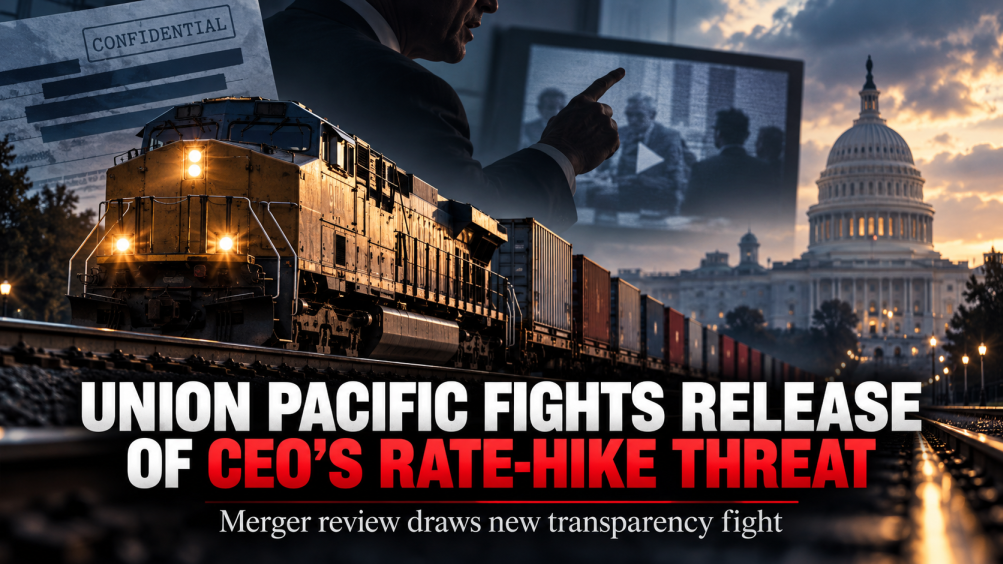
WASHINGTON—Union Pacific is seeking to keep video footage of remarks by Chief Executive Jim Vena out of the public record as the railroad and Norfolk Southern press ahead with their proposed merger before the Surface Transportation Board.
The dispute centers on comments Vena made in March at a Southwest Association of Rail Shippers conference. Merger opponents say Vena suggested that shippers opposing the transaction could face higher rates if the deal fails and he remains CEO.
In an Oct. 13 filing with the Surface Transportation Board, Union Pacific opposed efforts to make the recording public.
The issue has already drawn attention from Sen. Tammy Baldwin, D-Wis., who earlier this year urged the board to take Vena’s remarks seriously.
The controversy comes as the proposed merger faces opposition from a coalition of seven Republican state attorneys general led by Montana Attorney General Austin Knudsen. Knudsen and the attorneys general of Florida, Iowa, Kansas, North Dakota, South Dakota and Tennessee asked the Surface Transportation Board in August to reject the merger application, arguing the companies had failed to demonstrate that the combination would serve the public interest or increase competition.
At the same time, Union Pacific and Norfolk Southern have asked the board for permission to hold ex parte meetings with regulators reviewing the proposed transaction. Such meetings would take place outside public view, although the topics discussed and summaries of the meetings would later be disclosed.
The request has intensified criticism from opponents of the merger, including the Stop the Rail Merger Coalition, which argues that the railroads should provide greater transparency as federal regulators evaluate the deal.
Union Pacific and Norfolk Southern are seeking approval for a transaction that would combine two of the nation’s largest freight rail systems and create a single transcontinental railroad.
The Surface Transportation Board has already rejected earlier requests to summarily dismiss the revised merger application, allowing the regulatory review to continue. The board has emphasized that its decision to proceed does not signal whether it will ultimately approve the transaction.
The board has also intervened in disputes over what information should remain confidential. In July, it ordered the companies to make certain employee-impact data public after labor groups challenged its designation as highly confidential.
The merger review is continuing, with regulators weighing arguments from the companies, customers, labor groups, state officials and other interested parties.
Related Stories:
-
 Montana State doctoral student receives inaugural fellowship for human health researchers
-
 Labor Commissioner Sarah Swanson Elected to National Workforce Leadership Role
-
 Flint Launches Public Safety Ad
-
 Montana-Based DeliverFund Expands Human Trafficking Intelligence Partnerships
-
 Longtime MDT Official Larry Flynn Named Department Director
-
 Clear Ideological Divide Emerges in Montana Supreme Court Race