Montana Announces $28 Million Plan to Expand School-Based Health Care
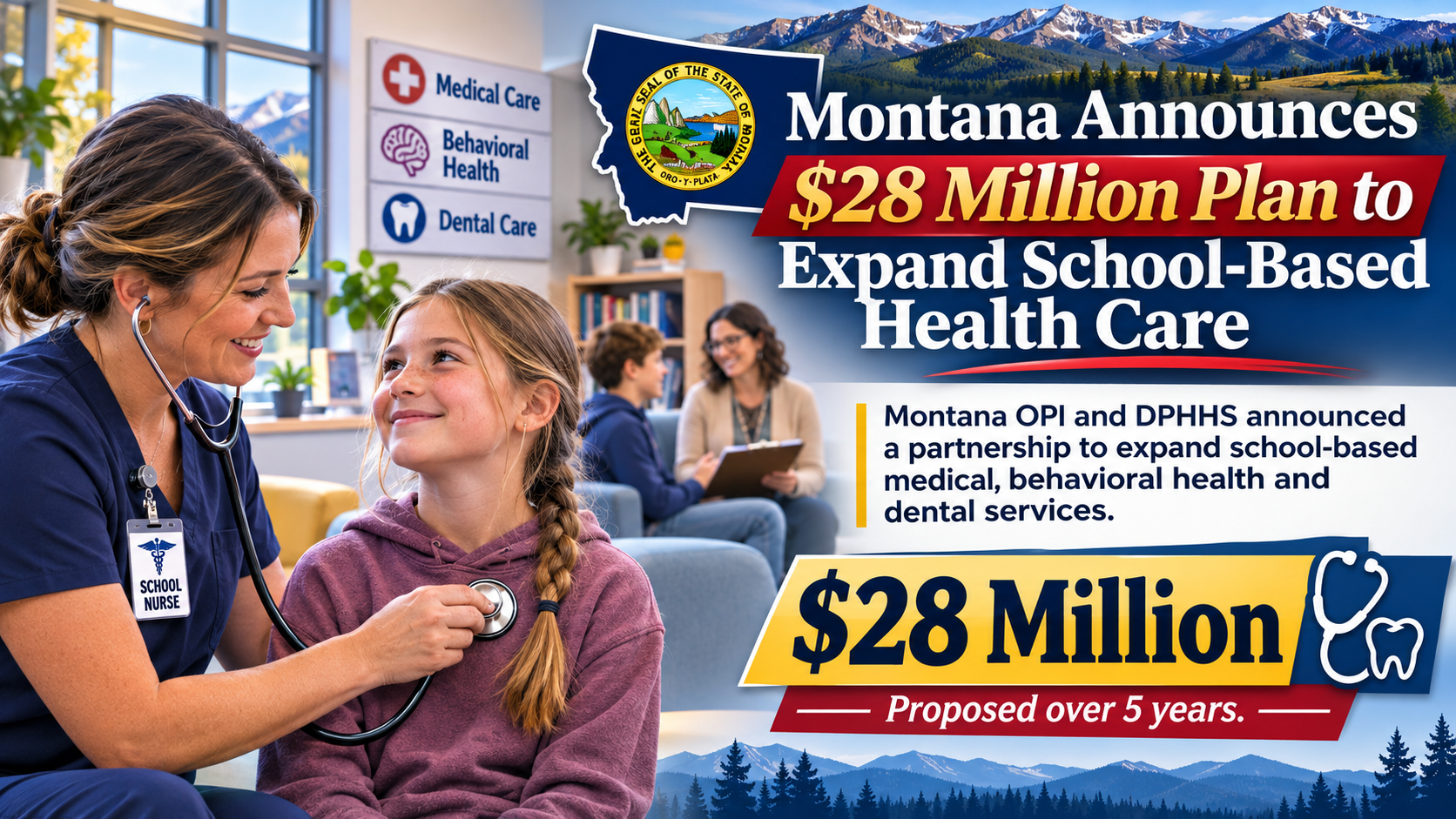
The Montana Office of Public Instruction and Department of Public Health and Human Services announced a partnership to expand school-based medical, behavioral health and dental services, with $28 million proposed over five years.
The agencies said approximately 90 school-based health sites already operate in Montana. The agreement would support existing facilities and new sites in rural counties and tribal communities, potentially paying for startup costs, equipment and facility improvements. The first-year proposal includes $4.96 million through the Rural Health Transformation Program.
School-based care brings primary medical, behavioral health and dental services into school communities through partnerships with existing providers. Those providers can include Federally Qualified Health Centers, Rural Health Clinics and tribal health departments.
Roughly 90 school-based care locations already operate in Montana. Officials say making services available near students can reduce problems caused by long travel distances, appointment scheduling and the cost of obtaining medical attention.
“Schools are the heart of our communities, and when students have access to the support they need, they are better positioned to succeed in the classroom,” Superintendent of Public Instruction Susie Hedalen said.
Under the agreement, the Office of Public Instruction will administer grants for new sites and expansion of existing sites. Eligible spending could include startup costs, facility improvements and medical equipment, with particular attention to rural counties and tribal communities.
The Department of Public Health and Human Services proposed $4.96 million for the initiative in the first year of the Rural Health Transformation Program and $28 million over five years.
Incoming DPHHS Director Dr. Douglas Harrington said schools can serve as community hubs where families are able to obtain essential health services more conveniently. The program is intended to strengthen local infrastructure without requiring school districts to become health care providers.
Participating medical organizations, not the school districts, would bill Medicaid or private insurance for eligible care. State officials say that arrangement could help maintain services after initial federal support ends.
The initiative connects with existing school wellness and coordinated health efforts. Administrators believe improved access to treatment could help student attendance, academic performance and classroom engagement, although particular services will depend on local needs.
The federal Rural Health Transformation Program supports Montana’s broader rural health initiatives through an award of approximately $233.5 million, funded by the Centers for Medicare and Medicaid Services.
Superintendent Susie Hedalen said local communities would determine the services they need. Participating health care providers, rather than schools, would bill Medicaid and private insurers for eligible services. The broader federal award supporting Montana’s rural health initiative totals approximately $233.5 million.
Related Stories:
-
 Montana Election Recap: Republicans Retain Control of Legislature and U.S. Senate
-
 Billings Counselor Sentenced to Prison for Medicaid Fraud Scheme
-
 Montana Foster Care Population Drops 48% as Gianforte Celebrates Adoption Month
-
 Knudsen Leads 20-State Coalition to Defend Pipeline Permits
-
 From Pharmacy to Policy: UM Student Finds Her Voice on Montana Board of Regents
-
 Trump’s veto could limit Democrats’ energy policy changes