
Trump Signs Six Bipartisan Bills Into Law Before Year’s End
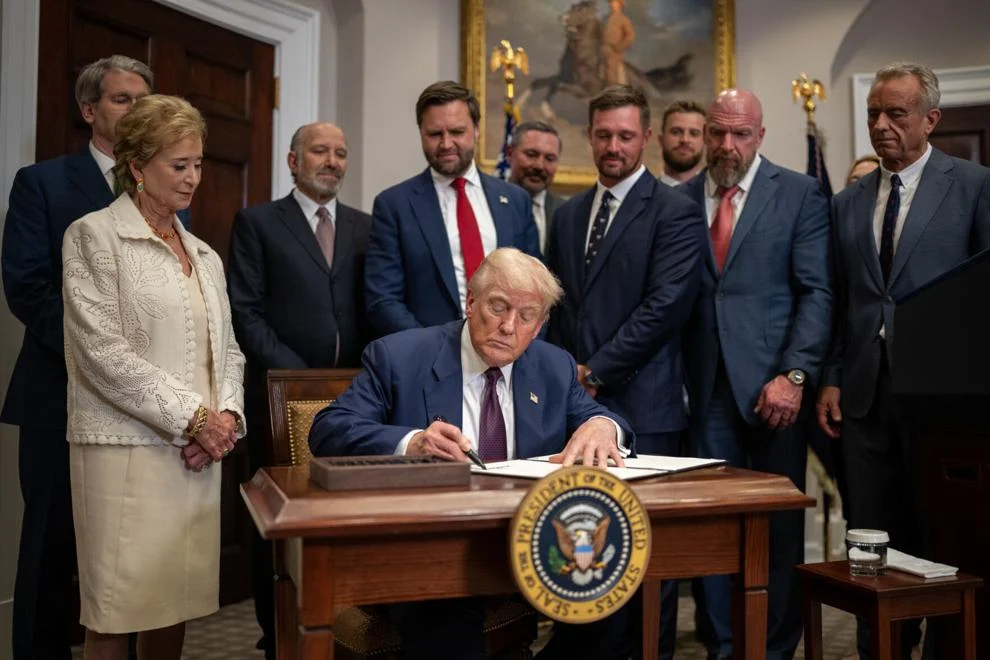
President Donald Trump on Friday signed six bipartisan bills into law, approving legislation that spans environmental protection, youth recognition programs, fisheries research, public land access, veterans’ benefits and disaster-related tax relief.
The bills were signed Dec. 26, 2025, as Congress wrapped up its year-end legislative work.
Among the measures is S. 216, the Save Our Seas 2.0 Amendments Act, which authorizes funding for the National Oceanic and Atmospheric Administration’s Marine Debris Program through fiscal year 2029 and for the Marine Debris Foundation through fiscal year 2025. The law also updates administrative requirements for both entities, aiming to strengthen efforts to prevent and clean up marine debris.
The president also signed S. 284, the Congressional Award Program Reauthorization Act, which retroactively reauthorizes the Congressional Award Board. The board administers a long-running program that recognizes achievement and public service among young Americans. The reauthorization applies retroactively from Oct. 1, 2023, and extends through Oct. 1, 2028.
Another environmental and research-focused bill, S. 2878, the Great Lakes Fishery Research Reauthorization Act, renews funding through fiscal year 2030 for monitoring, assessment and research of fisheries across the Great Lakes Basin.
On public lands access, Trump signed H.R. 187, the Modernizing Access to Our Public Waters Act of 2025, also known as the MAPWaters Act. The legislation directs the U.S. Department of Agriculture and the Department of the Interior to standardize and publish data related to public recreational access to federal waterways, as well as federal fishing restrictions, with the goal of improving transparency for outdoor users.
The president also approved H.R. 410, the Alaska Native Vietnam Era Veterans Land Allotment Extension Act of 2025, which extends the Alaska Native Vietnam Era Veterans Land Allotment Program through Dec. 29, 2030, giving eligible veterans additional time to apply for land allotments promised decades ago.
Rounding out the package, H.R. 1491, the Disaster Related Extension of Deadlines Act, requires the U.S. Department of the Treasury to treat postponed tax return deadlines resulting from federally declared disasters or certain other events as formal deadline extensions when calculating limits on tax refunds.
Together, the bills reflect a mix of environmental, recreational, veterans and tax-related priorities that drew support across party lines and were cleared by Congress before the end of the year.
By politics406 staff
Related Stories:
-
 Montana DOC Names Natalia Bowser as Deputy Director
-
 Fentanyl seizures in Montana plunge in 2025
-
 Sheehy Introduces Bipartisan Bill to Expand Access to Innovative Veteran Care
-
 What can taxpayers do when local governments waste their money?
-
 White House touts March jobs report
-
 Gianforte Highlights Firearms Manufacturing Growth During Kalispell Visits