
Meet Brad Gerstner, the Architect of Trump Accounts
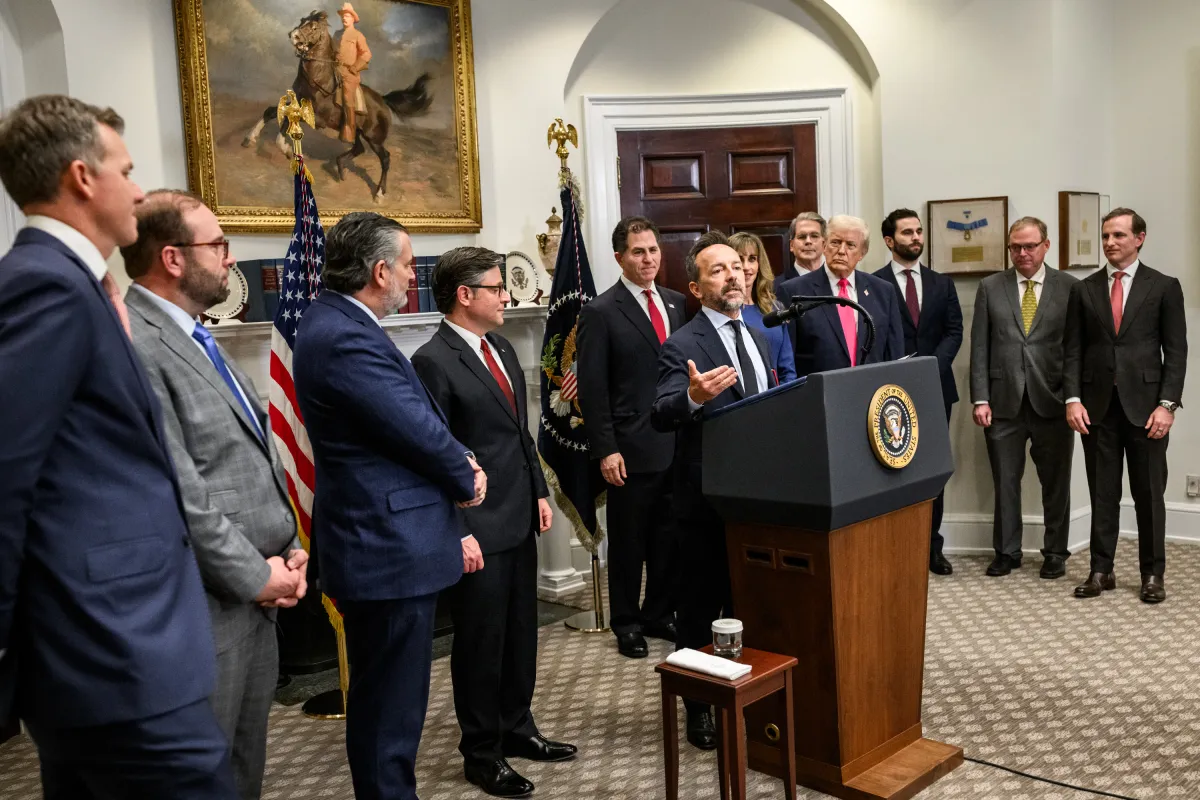
When President Trump singled out Brad Gerstner during his State of the Union address in February, the venture capitalist rose to a standing ovation. Trump called him “a very tremendous guy” who was “behind it right from the beginning” — a reference to Trump Accounts, the federal child savings program that launched in July and gives $1,000 to children born between 2025 and 2028 to invest in the stock market.
Gerstner, 55, has also pledged up to $100 million of his own money to give every child under age 5 living in Indiana a $250 head start on an account.
Sue Anne Gilroy, who hired Gerstner decades ago when she served as Indiana Secretary of State from 1994 to 2002, said the program bears his fingerprints so thoroughly that it deserves his name. “They should be called Gerstner accounts,” she said. “He did this himself. He didn’t have lobbyists. He didn’t hire people … And he happened to have a president who got the concept immediately and understood it.”
Roots in Northern Indiana
Trump Accounts formally launched this summer, but the idea traces back decades, to Gerstner’s childhood in Syracuse, Ind., where he grew up with three siblings and attended public school. His parents divorced when he was young, and his father’s small auto-parts manufacturing business went under during the economic downturn of the 1980s.
“I watched my family and community struggle as Indiana’s automotive economy declined,” Gerstner said in an email. “During that time, I also witnessed firsthand how even a modest investment, given time to compound, could alter the trajectory of a person’s life.”
His first taste of business came in high school, working for the founder of an Elkhart-based RV company that was later sold to Warren Buffett. After graduating, Gerstner won a Lilly Scholarship covering full tuition at Wabash College, where he graduated at the top of his class with a degree in economics and political science.
Wabash College President Scott Feller said classmates have told him over the years that Gerstner was “always the smartest guy in the room.” “We’ve had a number of Wabash graduates who made a mark … and I think Brad is certainly in excellent company in terms of making a difference in the world,” Feller said.
Gerstner went on to earn a law degree from Indiana University and briefly worked at the Indianapolis law firm Ice Miller before entering state government.
A Detour Into Public Service
While still in college, Gerstner had worked periodically for U.S. Sen. Richard Lugar. Years later, Lugar recommended him for a position as Indiana’s deputy secretary of state, and Gerstner spent roughly three years in the mid-1990s under Gilroy overhauling the department’s business division.
According to Gilroy, the office was more than 20 days behind in processing mail from businesses and law firms when Gerstner arrived. He assembled a committee, streamlined the paperwork process and digitized much of it, eventually bringing the office to same-day service. “He energized the staff,” Gilroy said. “He made everybody think differently. I don’t think I ever could have accomplished what I did in my little space in state government if he hadn’t been alongside me.”
From Startups to Altimeter
Gerstner left state government around 1999 and co-founded an online travel company that Expedia acquired in 2001. He went on to found two more companies later acquired by Google and Marchex, an AI-driven conversational analytics firm, before launching his current venture, Altimeter Capital, in 2008 — in the middle of the financial crisis.
Rather than retreat from the turmoil, Gerstner built Altimeter around a simple conviction: Technology would remain the most powerful force in the modern economy, and companies riding long-term innovation cycles would outperform over time. That philosophy shaped Altimeter’s investment approach, which centers on identifying secular “supercycles” early and backing platform businesses positioned to dominate them. The firm’s public equity strategy stays relatively concentrated, weighted toward founder-led companies benefiting from structural trends such as artificial intelligence, cloud infrastructure and digital platforms — bets Gerstner has described as aimed at owning the winners of the next decade rather than chasing quarterly results.
Altimeter today manages roughly $20 billion across public equities and private startups. Gerstner, who lives in California, has become known as one of Silicon Valley’s sharper technology investors and an early backer of AI companies; Forbes ranked him 21st on its Midas List of top venture capitalists this year.
A Long-Held Vision Becomes Law
Gerstner first floated the idea of investment accounts for every American child in 2020 and founded the nonprofit Invest America in 2023 to push the concept forward. That effort culminated this year in the creation of Trump Accounts, established under the One Big Beautiful Bill as the first federal child savings program in U.S. history.
Under the program, parents, nonprofits and private companies can all contribute to a child’s account. Once account holders turn 18, they can tap the funds for college, continuing education or a home purchase, or let the investment continue growing toward retirement. Through Invest America, Gerstner has also lobbied private companies to contribute, helping generate additional wealth for participating children. The largest private pledge to date has come from Michael and Susan Dell, who committed $250 to Trump Accounts for 25 million children — a total of $6.25 billion.
Gilroy said Gerstner’s success in bringing the idea to fruition didn’t surprise her. He has always thought big, worked relentlessly and let his convictions guide him, she said, calling the program “a brilliant way to invest in our country and in our democracy and one significant way to shrink the wealth gap.” It’s the kind of ambitious idea, she said, that only Gerstner could have pulled off.
Gerstner, for his part, traces the entire effort back to where he started. “We are all byproducts of where and how we grew up,” he said. “My commitment to contribute $250 to Trump Accounts for qualifying children across Indiana is deeply personal. The principle is simple: expand ownership, opportunity and belief in the American dream for every child.”
By: BSB News wire
Related Stories:
-
 Nearly 70 Million Kids Get Trump Accounts
-
 Amazon Pledges $1 Billion to Data Center Communities Amid Growing Backlash
-
 Minnesota Woman Convicted in $3.6 Million Medicaid Housing Fraud Scheme
-
 Treasury Unveils 2026 Financial Literacy Strategy Focused on Youth, Investing and Fraud
-
 Treasury Names Judy Shelton as Counselor Focused on Currency Policy
-
 Pentagon Invests in Quantum Computing as National Security Priori