Gordon Says Wyoming Supreme Court Ruling Clarifies School Funding Duties
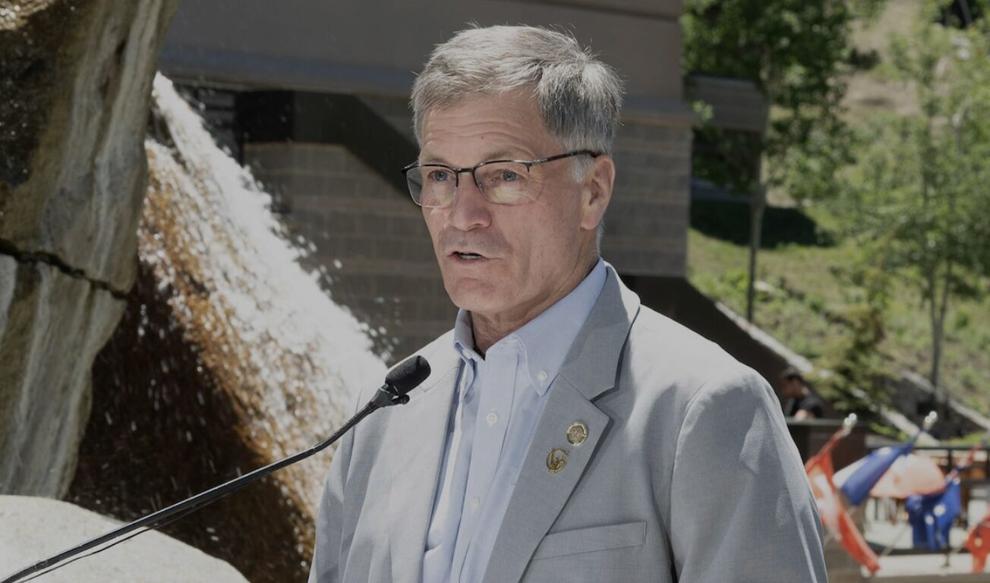
Wyoming Gov. Mark Gordon said a new state Supreme Court ruling provides clearer direction on the Legislature’s constitutional obligations for public-school funding while preserving lawmakers’ authority over how the state meets those requirements.
The Wyoming Supreme Court affirmed in part and reversed in part a lower-court ruling in a long-running dispute over education funding. The court held that the state’s school-finance model failed to adequately reflect the true cost of teacher salaries and did not properly account for inflation through required external cost adjustments.
At the same time, the court rejected several requirements imposed by the district court, including statewide funding for one-to-one student technology, school resource officers and nutrition programs. It also reversed an order requiring a statewide assessment of school facilities for educational suitability.
Gordon said the decision reinforces Wyoming’s constitutional obligation to provide students with a quality education but also recognizes the Legislature’s role in determining how that obligation is met.
“The Court affirmed that the Legislature must address the true cost of teacher salaries and follow the statutory process for evaluating and addressing inflation in the school funding model,” Gordon said.
The governor also emphasized the portions of the ruling that preserved legislative discretion, including the court’s conclusion that lawmakers are not constitutionally required to fund every proposed addition to the state’s education model.
The court’s majority found that Wyoming’s funding model had fallen behind the cost of recruiting and retaining teachers. It noted that model salaries had changed little over more than a decade while actual salaries, regional teacher pay and wages in comparable professions rose.
The court also said the Legislature had not consistently followed the state’s statutory process for inflation adjustments, which is intended to keep school funding aligned with changing costs between periodic recalibrations.
Gordon said the state now needs a school-finance system that reflects actual education costs while remaining sustainable for taxpayers over the long term.
He argued that additional spending alone should not be considered the measure of a successful education system, saying the focus should remain on whether students graduate prepared for higher education, employment, military service and participation in their communities.
The ruling also gives school districts continued flexibility over how they use block-grant funding. Wyoming’s system calculates funding based on the estimated cost of delivering the state-defined educational program and then allows districts discretion in allocating those dollars.
The Supreme Court declined to keep the case under continuing judicial supervision, saying it would assume the Legislature will act in good faith to comply with the ruling. The court said future legal challenges remain available if stakeholders believe lawmakers fail to meet constitutional and statutory requirements.
Gordon said the next step now rests with lawmakers.
“The Court has provided the Legislature with clear guidance. Now it is time to do the work,” he said.
By: Montana Newsroom News Wire
Related Stories:
-
 Minot Attorney Christene Reierson Appointed to North Central Judicial District
-
 Vedder Named Assistant Vice President at Minneapolis Fed
-
Washington Man Charged With Attempting to Aid Houthis
-
 Idaho Youth Pheasant Season Opens Oct. 8
-
 North Dakota Pipeline Battles Put Local Control, Dakota Access Back in Court
-
Federal Court Rejects Challenge to Idaho Sex Offender Registry Law