Daines Pushes for Crypto Tax Framework
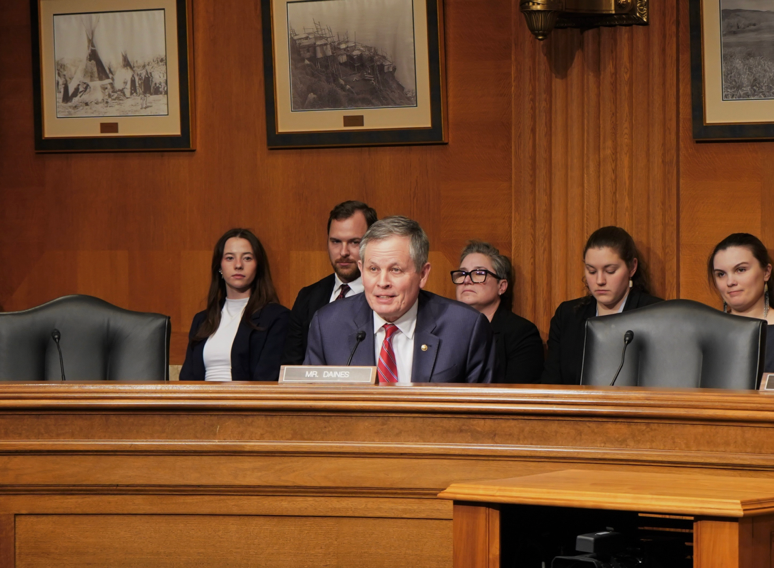
Sen. Steve Daines used a Senate Finance Committee confirmation hearing Wednesday to press two Treasury Department nominees on the need for a comprehensive federal tax framework for digital assets, arguing that outdated tax rules are pushing American entrepreneurs and innovation overseas.
Daines questioned Francis Brooke, nominated to be deputy secretary of the Treasury, and Sriprakash Kothari, nominated to be assistant secretary of the Treasury, on the consequences of leaving digital asset taxpayers without clear and administrable rules.
Daines told the nominees that Congress has taken historic steps on digital assets this session, including establishing the first federal regulatory framework for payment stablecoins through the GENIUS Act, but said the tax code remains unfinished business. The current code, he said, forces taxpayers to apply rules written decades before blockchain technology existed.
“Taxpayers deserve rules they can understand. The IRS deserves rules they can administer. And American entrepreneurs deserve certainty that allows them to build their businesses here rather than overseas,” Daines said.
Daines described a comprehensive digital asset tax framework he has been developing over the past year, built around reducing unnecessary complexity, increasing compliance, protecting the tax base and keeping digital asset jobs and innovation in the United States. Where digital assets function like securities or commodities, his proposal would apply familiar tax principles including wash sale rules, constructive sale rules and an elective mark-to-market regime. Where blockchain technology creates genuinely different transactions, the proposal would provide tailored rules for stablecoin payments, network fees, staking, lending, investment trusts and charitable contributions.
Brooke told Daines the United States needs to ensure it is the leader setting global standards for digital assets. Kothari said that for the U.S. to maintain a leadership position in digital assets and digital currency, it needs a regime with clear rules of engagement backed by enforcement.
Daines has previously told Bloomberg Tax that the Senate Finance Committee has a crypto tax framework in place and could hold a markup as early as fall 2026, with the Senate’s approach described as closely aligned with work already underway in the House Ways and Means Committee.
Related Stories:
-
 Crow Tribe Water Rights Bill Heads to President’s Desk
-
 Medal of Honor Monday: Army Capt. Daniel W. Lee Sr.
-
 Fed Governor Says AI Is Driving a New Era for FRED Economic Data
-
 Longtime MDT Official Larry Flynn Named Department Director
-
 Flint Unveils Tax Plan, Targets Forstag’s Lobbying Record
-
 Montana State enrolls record 17,477 students, welcomes largest ever incoming first-year class