Supreme Court could redefine 14th Amendment application
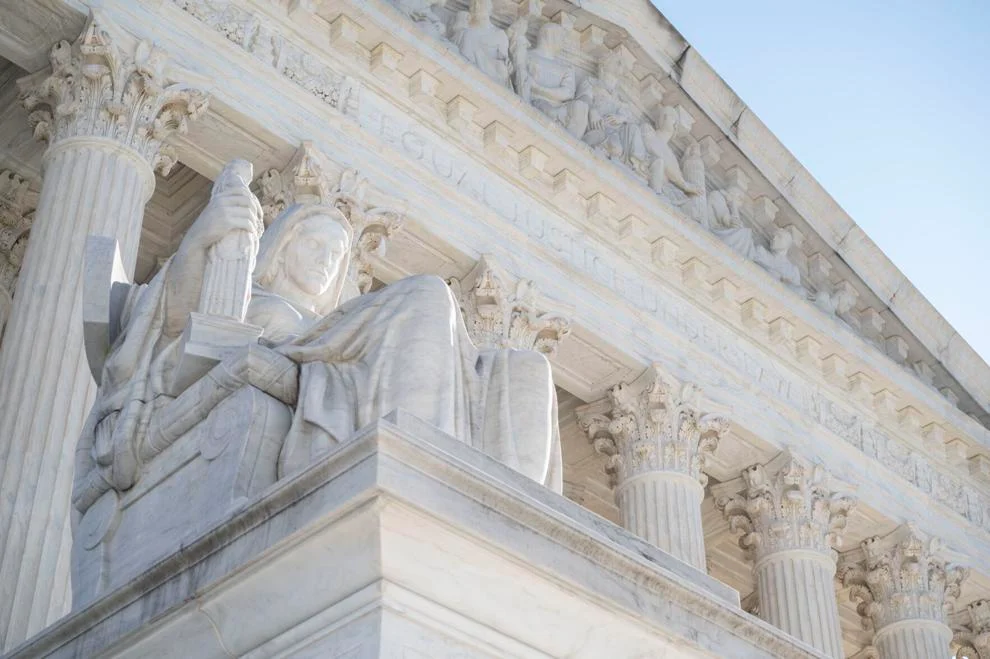
The Center Square) – The U.S. Supreme Court will decide a case in 2026 challenging President Donald Trump’s authority to end birthright citizenship.
Trump v. Barbara challenges Trump’s executive order that denies birthright citizenship to children born after Feb. 19, 2025, whose parents are either illegally present in or temporary residents of the United States.
The concept of birthright citizenship rests on a Supreme Court interpretation of the 14th Amendment to include children born in the United States to foreign parents. The 14th Amendment reads: “All persons born or naturalized in the United States, and subject to the jurisdiction thereof, are citizens of the United States and of the State wherein they reside.”
Legal experts said the justices’ interpretations of “subject to the jurisdiction thereof” will likely be the deciding factor in this case’s outcome.
Michael Ramsey, a law professor at the University of San Diego, said the 14th Amendment gave citizenship to children born in the United States whether their parents were in the country legally or illegally. He said jurisdiction refers to an individual who is under the lawmaking authority of a certain nation.
“You are a citizen if you or your parents are under the authority” Ramsey said, “of the United States at the time you are born.”
He said individuals belonging to Native American tribes would not be included in the 14th Amendment’s citizenship definition because they operated under separate legal jurisdictions.
Ilan Wurman, a law professor at the University of Minnesota, pointed out that children of ambassadors living in foreign countries are offered citizenship under the United States. He argued this is because the roots of American law come from English common law.
Wurman said the status of a parent under the protection of the nation is a necessary condition to citizenship.
“Parental status is what matters and whether they are under the protection and therefore within the allegiance of the sovereign,” Wurman said.
Wurman argued that English common law established protection under a sovereign as a necessary condition to citizenship. Therefore, without protection, citizenship can be rejected.
“Birthright subjectship only applied if your parents were under the protection of the sovereign, and if your parents had come unlawfully, without invitation, without permission, without safe conduct, they would not have been under the protection of the sovereign,” Wurman said.
Ramsey argued that even when people are unlawfully in the United States, they are subject to the country’s laws.
“The reason that [diplomats] are outside of jurisdiction is because, again, as a general matter, diplomats are not subject to the lawmaking and law execution authority of the United States, because they have sovereign immunity, or diplomatic immunity under international law,” Ramsey said.
Wurman said people who enter the country illegally do not have access to the courts, which marks a clear distinction between those in combat situations.
“It’s true that there’s no body of international law that applies to people who come here illegally, who are not enemy aliens, who are not, you know, prisoners of war,” Wurman said.
The Supreme Court is expected to hear oral arguments for Trump v. Barbara in early 2026. A date has yet to be set for the case to be heard.
Related Stories:
-
 Oil Shock Jolts Global Economy
-
 Gordon Declines to Pursue Removal of Hot Springs County Commissioners
-
 Barrasso: Senate Dems have ‘blood on their hands’ for DHS shutdown
-
 Sheehy Introduces Bipartisan Bill to Expand Access to Innovative Veteran Care
-
 Sheehy’s Bipartisan VA Home Loan Awareness Act Passes Senate
-
 Labrador Opposes Gender Transition Surgeries for Prisoners