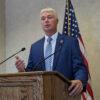
Montana State announces record spring enrollment of 16,373 students
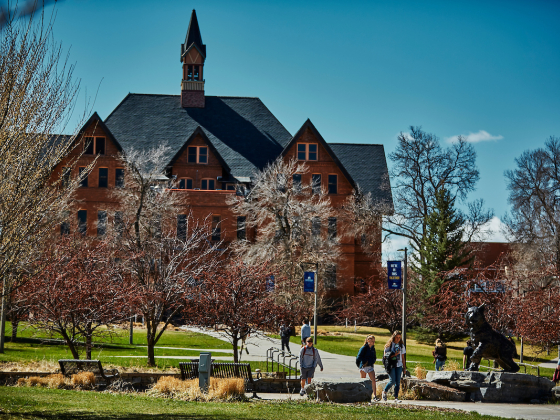
When Cedar Stellon O’Donnell was in high school in Fairbanks, Alaska, she visited Montana State University as part of a tour of colleges she was considering. She wasn’t expecting to decide on attending MSU so quickly, but she said the energy of the campus during that visit made a lasting impression.
“Everyone here seemed proud to be an MSU student, and they were so excited about what MSU had to offer,” Stellon O’Donnell said. “The students just seemed to have such excitement about being a Bobcat and being at MSU.”
Now, three years later, Stellon O’Donnell is a junior pre-med student majoring in chemistry and biochemistry. She has taken on multiple roles at MSU, from student ambassador for the College of Letters and Science to peer advocate for Campus Civil Rights to vice president of the MSU chapter of Delta Gamma.
And when life gets challenging, the people she found on campus helped her through.
“Staying at MSU was a matter of the people that I found here. I don’t think I would have found those people if I wasn’t at Montana State and I wasn’t participating in campus life to the extent that I have,” she said.
Stellon O’Donnell is one of the thousands of students who have chosen to enroll – and remain – at Montana State. The university’s spring enrollment has set a new all-time record of 16,373, marking the sixth consecutive year of spring semester enrollment growth at the state’s largest university.
The new headcount, which is recorded after the 15th day of classes each semester, is about 1% larger than this time last year, when spring enrollment was 16,237. Over the past five years, spring headcount at MSU has increased 8.8%.
This spring’s total includes 1,959 graduate students who are pursuing master’s or doctoral degrees and a record 14,414 undergraduate students. The university enrolled 8,467 Montana resident students this spring. That number is 52% of the MSU student body and at least 2,000 more than the Montana student enrollment on any other campus in the state.
“Montana State’s a special place for a lot of reasons, and the biggest reason of all is our students,” said MSU President Brock Tessman. “They have chosen MSU, and in return everyone at MSU is proud to do everything we can to help our students achieve their educational and career goals.”
Of those first-time-in-college students who enrolled for fall — including students seeking bachelor’s degrees, associate degrees and certificates — 91.7% returned to MSU for the spring semester.
“Once students enroll at Montana State University, we work extraordinarily hard to provide resources and support to help them stay in school and graduate on time,” said Steve Swinford, MSU’s vice president of student success.
Those efforts have included streamlining MSU’s registration process, improving communication with students through the NavMSU app, increasing the capacity of key courses that students need to graduate on time and ensuring that students have chances to meet one-on-one with advisers to help them navigate college, said Swinford.
Belgrade resident Debe Honibah Brady started at MSU this spring. As a non-traditional student and single parent, she said she chose to enroll and study business management because an MSU education will help her in her work as an event planner.
She said she appreciates the resources MSU provides.
“I know where I can go for tutoring; all of the information I need to succeed is in one place,” she said. “(MSU is) literally offering me the tools to be successful.”
In addition to setting a headcount enrollment record this spring, MSU also set a new record in full-time equivalent, or FTE, enrollment, at 14,557. FTE is calculated by dividing the total number of credits that all MSU students have enrolled in by the number of credits considered a full-time course load. Over the past five years, full-time equivalent enrollment at MSU has increased 10.2%
“What FTE enrollment ultimately tells us is that more MSU students are taking more credits per semester and that they’re making progress toward earning their degrees and starting their careers,” Swinford said.
Swinford also noted that taking more credits per semester saves students money over the course of their college years. Students do not pay additional tuition for credits beyond the first 12 they take per semester. Taking 15 or 18 credits per semester can keep students on track to graduate on time — or even early — potentially saving students and their families thousands of dollars.
Instructors in the classrooms, studios and laboratories also contribute crucially to students’ experiences. The university’s executive vice president for academic affairs and provost, Robert Mokwa, praised MSU’s faculty for their commitment to students.
“Our exceptional faculty members mentor, challenge and inspire students every day,” he said. “The strong enrollment and retention numbers we’re seeing this spring reflect the confidence and trust that students (and their families) have in our faculty.”
Among MSU’s spring enrollment highlights: Gallatin College MSU, which offers programs in vocational training and career technical education, saw its headcount increase by 5.9%, setting a record spring enrollment of 1,493. Located in five off-campus locations across the Bozeman area, Gallatin College MSU has been the university’s fastest growing college for years.
In September, MSU announced a fall enrollment record of 17,165 students. Fall enrollment is traditionally higher than spring enrollment.
MSU’s spring enrollment by the numbers
- Headcount: 16,373 (new spring record)
- Undergraduate headcount: 14,414 (new spring record)
- Graduate headcount: 1,959
- Gallatin College MSU headcount: 1,493 (new spring record)
- Dual enrollment headcount: 865 (new spring record)
- Montana resident students: 8,467
- MSU awarded 997 degrees at December’s commencement ceremony, including 778 bachelor’s degrees, 108 master’s degrees and 26 doctorates.
- Largest three academic colleges: Letters and Science (3,120), Norm Asbjornson College of Engineering (3,098), and Jake Jabs College of Business and Entrepreneurship (2,283).
Related Stories:
-
 Acclaimed Author, Top Business Leader to Receive UM Honorary Doctorates
-
 Knudsen Leads 24-State Push for Probe Into Climate Chapter Used in Judicial Manual
-
 Montana State to host artificial intelligence symposium March 26
-
Knudsen Praises Helena Commission for Rescinding Immigration Resolution
-
 Jury Finds Musk Liable for Misleading Twitter Investors in 2022 Takeover Fight
-
 Gianforte Highlights Value of Agricultural Exports During Visit to Dahlman Farms